




On the eve of the 2025 World Chinese Language Conference, President Xi Jinping replied to a letter from 61 young sinologists around the world. This inspiring message set a powerful tone for the World Chinese Language Conference. Held under the theme “Innovation Leads, AI Empowers, Learning Chinese Without Border”, the 2025 conference brought together nearly 5,000 participants from over 160 countries, showcasing how digital technologies are reshaping the way the world learns Chinese, and reaffirming language as a timeless bridge between civilizations.
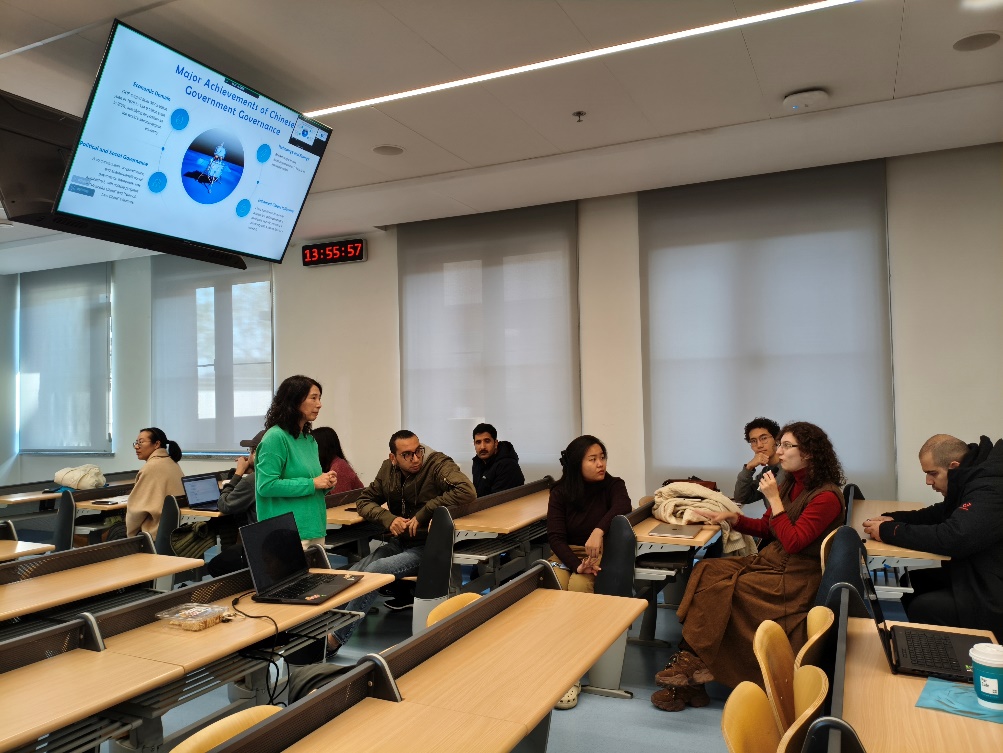
Against the backdrop of the World Chinese Language Conference and Zhejiang University’s growing global engagement, Chen Weiying, Vice Dean of the International College, delivered a thought-provoking lecture titled “From Mandarin to Modern Tech: China’s Global Engagement” on November 19th and 21st. Speaking in the university-wide course Survey of China, she addressed 189 international master and doctoral students from over 40 countries and 30 academic disciplines — a truly global classroom.
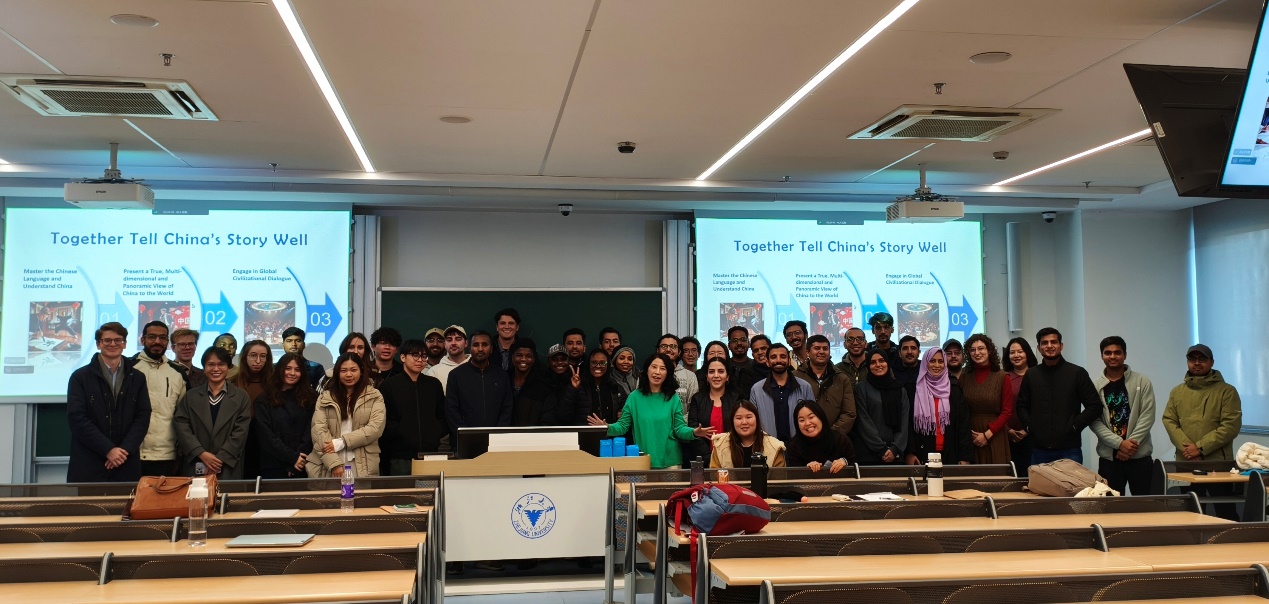
Three Perspectives: Innovation, Diplomacy, Language
Dr. Chen framed China’s evolving global presence through three interconnected dimensions: technological innovation, diplomatic philosophy, and linguistic connectivity. She began by tracing China’s transformation from “Made in China” to “Created in China”, highlighting world-leading innovators like Huawei, BYD, and Douyin — symbols of China’s new wave of creativity. These companies, she noted, are not only major producers but also global trendsetters influencing markets and shaping digital culture.
Turning to diplomacy, she guided students through China’s foreign-policy foundations — from “the Five Principles of Peaceful Coexistence” to “the Belt and Road Initiatives”, and now to the vision of the community of shared future for mankind. She emphasized China’s expanding role in multilateral institutions, South-South cooperation, and sustainable development.
Finally, she reflected on the rise of Mandarin as a global language, now formally taught in more than 80 countries. With AI-powered learning tools and digital classrooms, she argued, Chinese language learning has become more accessible than ever for young people worldwide.
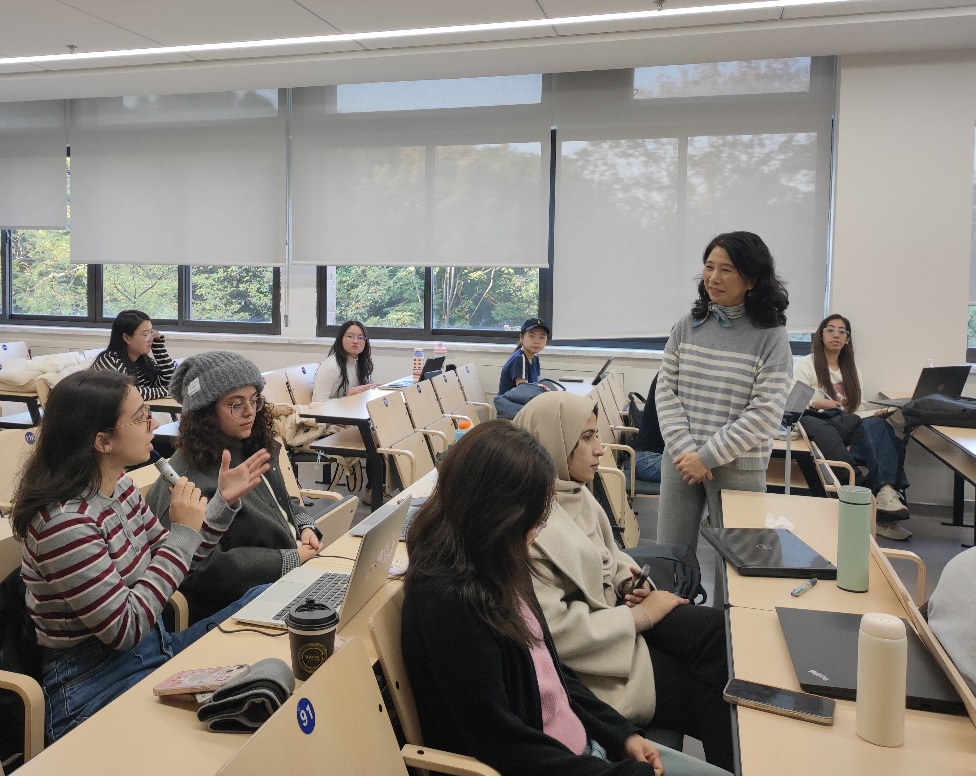
International Voices: Real Stories, Real Connections
One of the most memorable parts of the lecture came from the students themselves. During a lively interactive session, they shared personal reflections on their experiences in China — honest, nuanced stories that challenged stereotypes and revealed deeper insights.
Abdullah Khaled Mahmoud Mohamed from Egypt said: “Every country has an ancient civilization or a promising future. But China, I think, has both.”
Carolina Brum Monteiro de Castro Vieira from Brazil observed: “One of China’s strengths today is that it follows through with its policies and invests heavily on research.”
Abdul Karim Kamara from Sierra Leone praised China’s stable currency, price-control mechanisms, and robust industrial supply chains for contributing to national resilience and social stability.
Brazilian students Bruna Peter Rosa and Giovanna Araujo Kotchevicz Wagner commended China’s consistent and responsible role in global affairs, describing it as a “reliable partner” in peacebuilding and South-South cooperation.
Karl Rasmus Svahn from Sweden recounted a small yet touching moment — Chinese friends insisting on paying the bill — an act that revealed genuine warmth and hospitality.
These shared moments turned the classroom into a space of a cross-cultural exchange. Dr. Chen encouraged students to become storytellers of their own China experience. “Tell your own stories. Show the world a China that is real, multidimensional, and comprehensive.”
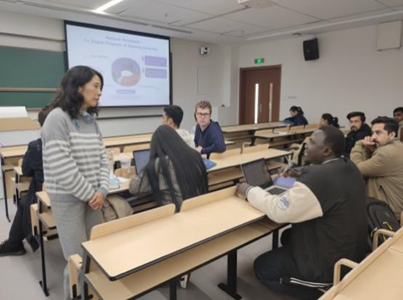
A Philosophical Dialogue Across Cultures
Returning to the classroom after nearly a decade, Dr. Chen expressed her joy in teaching such a diverse and intellectually engaged group. The conversation soon turned to classical Chinese philosophy: harmony without uniformity (和而不同), benevolence (仁), the ideal of great unity (天下大同), and the golden rule — do not impose on others what you yourself do not desire (己所不欲,勿施于人).
Inspired, students from Vietnam, Pakistan, India, Germany, Sweden, and Egypt responded by sharing parallel values from their own cultural traditions — in their own languages. Though the words were different, the underlying principles resonated strongly. For a moment, linguistic diversity became a symphony of common humanity.
The discussion also explored generational identity, youth culture, and the influence of social media — universal concerns that bridged students’ experiences across continents.
After class, Maureen Njambi Kogi from Kenya shared:“The discussion was so engaging. I realized young people everywhere are navigating similar questions — each in their own way, and at their own pace.”
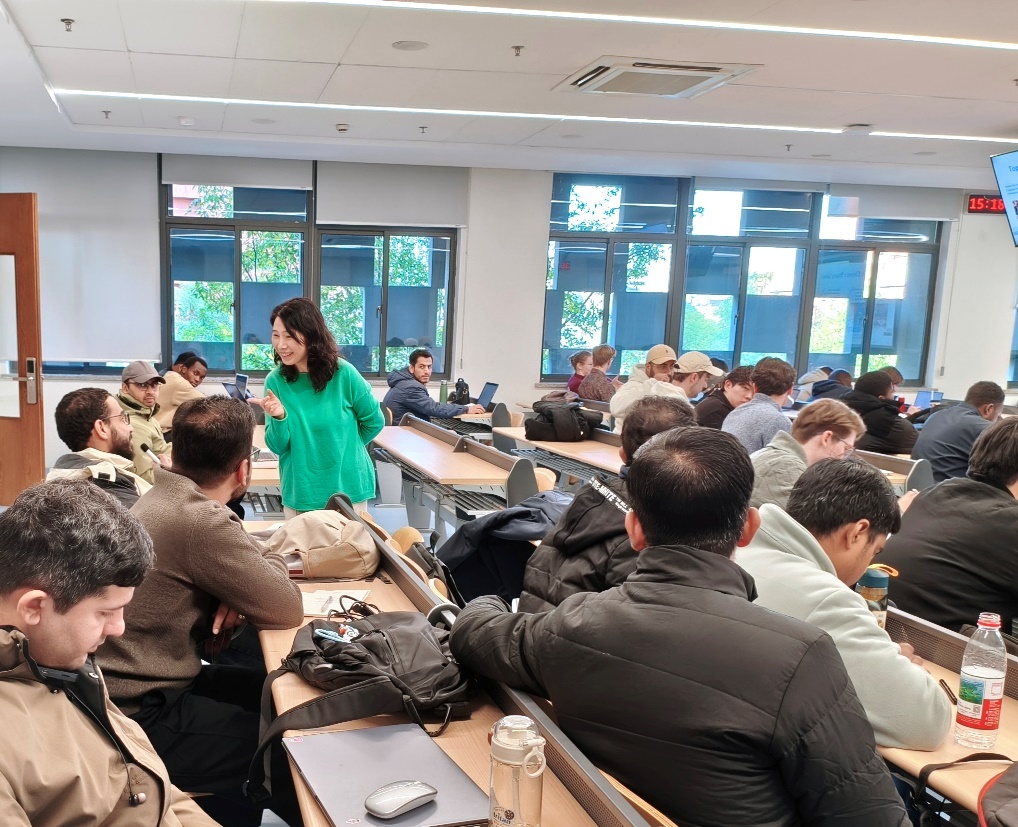
Technology Connects Multiple Campuses
With support from TronClass, students across Zhejiang University’s Haining, Zhoushan, and Ningbo campuses joined the lecture in real time, participating actively in discussions and Q&A. This seamless integration reflects ZJU’s commitment to educational digitalization and showcases the university’s state-of-the-art multimedia facilities — mirroring broader advances in China’s smart-education landscape.
Enthusiastic feedback soon followed. Nayaab Shahir Pandit from India remarked that he especially appreciated how clearly and fluently Dr. Chen explained China’s strategies in science, diplomacy, and language.
A New Chapter for International Education at ZJU
In her concluding remarks, Dr. Chen noted: “Innovation shows what China contributes to the world. Diplomacy reflects how China engages with it. And language — that is where dialogue between civilizations begins.”
She encouraged international ZJUers to serve as bridges between cultures — interpreters not only of language, but also of context, meaning, and shared experience. In the spirit of the 15th Five-Year Plan, she reaffirmed Zhejiang University’s mission to expand the global reach of Chinese language and culture, deepen international partnerships, and welcome outstanding young people from around the world to understand China firsthand.
This lecture was more than an academic session. It was a celebration of cross-cultural understanding — a space where ideas converged, perspectives widened, and genuine connections were formed. Through open dialogue and mutual respect, a new China continues to take root in the hearts and minds of international ZJUers.
Written and photographs by Yu Qian
Edited by Chen Weiying


@ Study at ZJU Wechat Subscription
Copyright © 2021International college,
Zhejiang University
Technical Support : hzccx Manage Login
You are the 1000 visitor


