




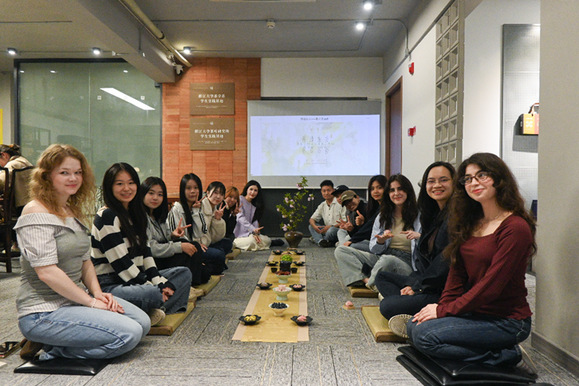
On the evening of April 14, a cultural exchange event themed “Reimagining the East: A Spring Tea Gathering” was warmly held at the Tea Research and Innovation Center on Zijingang Campus.
The Office of International Chinese Language Education invited eight representatives from the undergraduate Chinese Language program and language training program to join Chinese students from the university’s tea art team. Through activities such as Longjing tea tasting, tea culture lectures, discussions on the aesthetics of everyday life, and sampling seasonal tea snacks, participants immersed themselves in the profound heritage and unique charm of traditional Chinese tea culture.
More than a dozen teachers and students from different countries gathered together, embarking on a sensory and cultural journey through spring, accompanied by the lingering fragrance of tea.
Savoring Spring Through Tea: The Art of Appreciating Longjing
The event centered on a guided tasting of Longjing tea, thoughtfully designed to lead participants from Guizhou green tea to Qiantang Longjing and finally to West Lake Longjing. Through each cup, international students gradually discovered the subtle differences in aroma, flavor, and mouthfeel among teas from different regions and of varying grades.
“The first tea already had a lovely fragrance, but when we got to West Lake Longjing, the aroma was immediate, fuller and more intense,” remarked Fuhr Hannah Moira, a student from Germany.
The presenter offered a step-by-step introduction to Longjing tea, covering its geographic origins, varietal characteristics, grading system, and practical methods for assessing quality, such as observing the sinking speed of dry leaves in water. Through comparison and hands-on experience, students developed their sensory awareness while gaining a deeper appreciation for the Chinese tea aesthetic, characterized by a mellow, sweet, fresh, and refreshing taste.
The Eastern Way of Tea: The Cultural Journey of a Single Leaf
Following the tasting session, the event moved into a cultural exchange on “Eastern Tea Traditions.” The presenter traced the historical development of Chinese tea culture—from tea boiling in the Tang dynasty, to whisked tea in the Song dynasty, and loose-leaf brewing in the Ming and Qing periods—while also comparing the aesthetics and spiritual foundations of tea practices in China, Japan, and Korea.
“Chinese tea culture emphasizes harmony with nature and harmony in human relationships; Japanese tea ceremony pursues wabi-sabi and the idea of ichigo ichie (one encounter, one lifetime); Korean tea ritual highlights purity, unity, and alignment with nature.” Through richly illustrated explanations and the display of tea wares, international students gained a more vivid understanding of the diverse tea cultures across East Asia.
Students from Turkey, Japan, Korea, and other countries also actively shared their own tea-drinking customs. One Japanese student commented, “In Japan, we drink matcha and sencha, and the tea ceremony values ichigo ichie. Today’s gathering also feels like a precious ‘one encounter, one lifetime’ moment.”
Spring Tea, A Gentle Awakening: The Resonance of Tea and the Senses
In the session on “The Aesthetics of Tea in Everyday Life,” the event explored the deep connections between spring and tea through the lenses of climate, sensory experience, and art. From the playful imagery of spring ducks in classical paintings, to the flowing vitality of spring in Claude Debussy’s music, to the fresh amino acids accumulated by tea leaves after winter dormancy, spring tea was described as “spring made tangible.”
“When hot water is poured, the dry leaves slowly unfurl—that is spring for the eyes. When the tea touches the tongue, its fresh sweetness glides across the palate—that is spring for the taste,” the presenter explained. Participants were guided to engage all five senses while tasting tea, experiencing both the vitality of spring and the vitality of tea itself.
The Transformative Power of Culture: A Bridge Across Language and Worlds
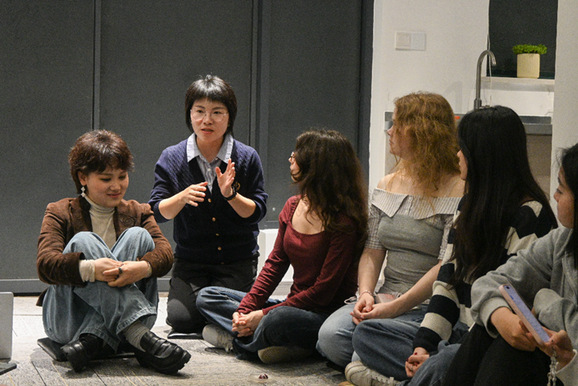
As the fragrance of tea lingered, the event drew to a gentle close amid laughter and lively conversation. Beyond the tasting itself, Chinese and international students engaged in warm exchanges, creating a relaxed and welcoming atmosphere. Several international students experiencing Chinese tea art for the first time expressed their enthusiasm, noting how much they enjoyed this event filled with a distinct Eastern charm.
Chen Weiying, Vice Dean of International College, emphasized that, “On the occasion of the seventh International Chinese Language Day, this event—guided by the integration of language, culture, and practice—enabled language to function as a cultural medium that can be experienced, used, and felt. Moving forward, we will continue to explore innovative, experience-based learning approaches, promote the integration of in-class and extracurricular learning, and build an engaging, participatory, and accessible environment for Chinese language learning. In doing so, language can truly become a bridge that connects people and deepens understanding of the world, fostering a new generation of learners with global perspectives and intercultural understanding.”


@ Study at ZJU Wechat Subscription
Copyright © 2021International college,
Zhejiang University
Technical Support : hzccx Manage Login
You are the 1000 visitor


