




May 22, 2026
Source: Global People MagazineBy YU Bing
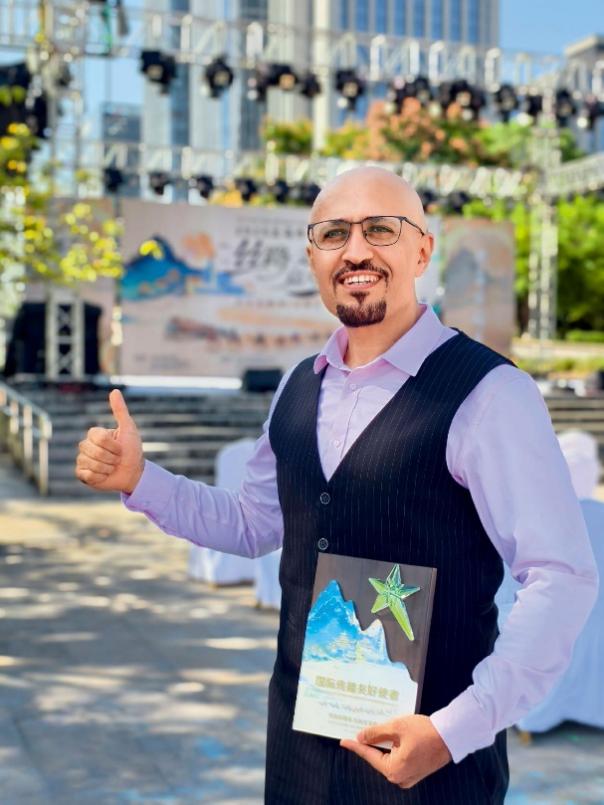
Dr. Amar Al-Badani was named the "International Communication Friendship Ambassador" at the Third Silk Road Cultural Carnival in Yiwu in 2025. (All photos are provided by the interviewee.)
On April 30, the last working day before the May Day holiday, the International Clinic of the Fourth Affiliated Hospital of Zhejiang University School of Medicine (ZJU4H) was bustling with patients. The waiting area was filled with people speaking English, Arabic, and occasionally a few hesitant words of Mandarin.
The consultation room door opened, and a doctor wearing glasses greeted the next patient in English. His name is Amar Al-Badani, a physician from Yemen. He is the first foreign doctor at ZJU4H and the first licensed foreign physician in Yiwu, making him one of the city's most familiar international faces.
Although Yemen is thousands of miles away from China, Amar's journey eventually brought him eastward to Yiwu, where he has built a second life and career.
Finding His Voice in China
Though Amar's consultation room is modest in size, it often feels like a miniature United Nations. During one morning alone, a Global People reporter observed him treating nearly ten patients from different countries.
"I spend four days a week at the International Clinic, where most of my patients are foreigners, and one day in the Department of General Practice serving local residents," Amar explained in fluent Mandarin.
Specializing in the diagnosis, treatment, and health management of common and chronic diseases, he has extensive clinical experience in cardiovascular and cerebrovascular diseases, hypertension, and diabetes. During consultations, he effortlessly switches among three languages. This ability did not come naturally. "Everything was driven by a dream," he said.
Amar was born in Ibb, a city in southern Yemen where a Chinese medical aid team was stationed. His father, an engineer, became acquainted with Chinese engineers working on road and bridge construction projects in Yemen and often shared stories about China, including traditional Chinese acupuncture.
One day, his father developed peripheral facial paralysis and sought treatment from the Chinese medical team. Thirteen-year-old Amar watched as Chinese doctors skillfully inserted fine acupuncture needles into specific acupoints on his father's face. Although he could not understand their language, he could clearly see the improvement. After several treatments, his father fully recovered.
The professionalism and compassion of the Chinese doctors, together with the effectiveness of acupuncture, left a lasting impression on the young boy. "I told myself that one day I would visit that country in the East and become a doctor like them."
What began as a childhood aspiration became a lifelong pursuit. After graduating from high school in 1997, Amar decided to study medicine in China. While friends encouraged him to choose an English-speaking country, believing Chinese would be too difficult to learn, he never wavered. His father fully supported the decision. That year, Amar arrived in China as a government-sponsored international student and began studying Chinese at Shandong University.
Recognizing that language is the foundation of medicine and the key to understanding a country, he started from the basics—pinyin and tones. To accelerate his learning, he imposed a strict rule on himself: communicate only in Chinese whenever possible.
He also developed what he jokingly calls a "clumsy method." Whenever he went out, he would quietly imitate conversations he overheard, much like a child learning to speak. On one occasion, his imitation was so enthusiastic that passersby thought he was behaving strangely. He quickly explained that he was from Yemen and was practicing newly learned Chinese words. The explanation amused everyone involved.
Thanks to his persistence, Amar passed the HSK Level 7 Chinese proficiency examination after just one year. He later pursued medical studies at Tianjin Medical University and Zhejiang University School of Medicine. Studying complex courses in both Western and Chinese medicine in a non-native language was challenging, but he remained committed to practice, repetition, and continuous learning from teachers and classmates.
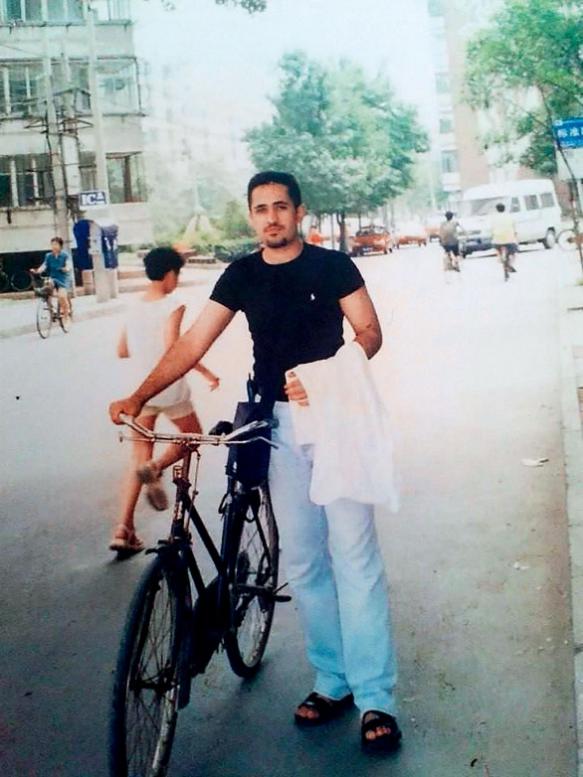
During his internship at Tianjin Medical University, Amar poses with his white coat
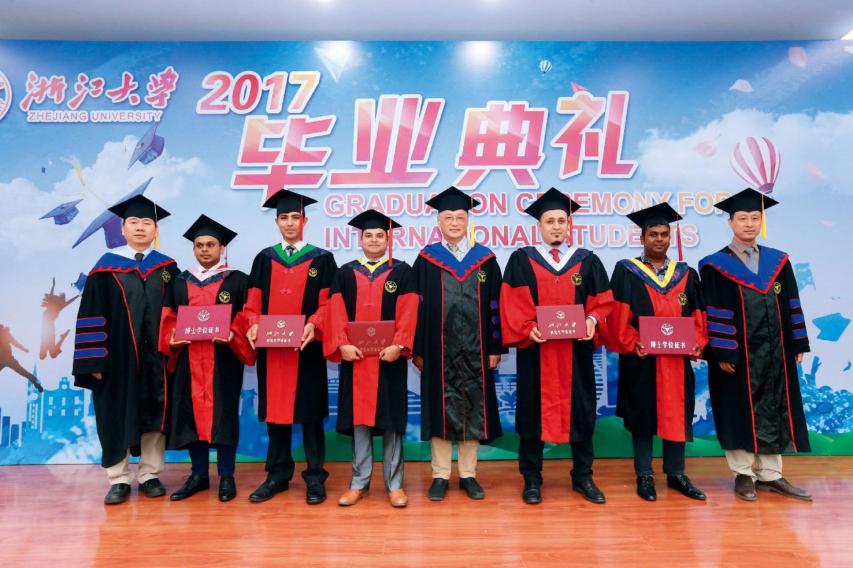
Amar graduated from Zhejiang University School of Medicine in 2017
In 2009, Amar won the gold prize at the Second Chinese Bridge Chinese Proficiency Competition for International Students in China. At the award ceremony, a judge asked him why he had chosen medicine despite his strong background in Chinese language and culture. “A good doctor needs philosophical thinking and humanistic care,” Amar replied. “I love Chinese culture, and it helps me become a better physician.”
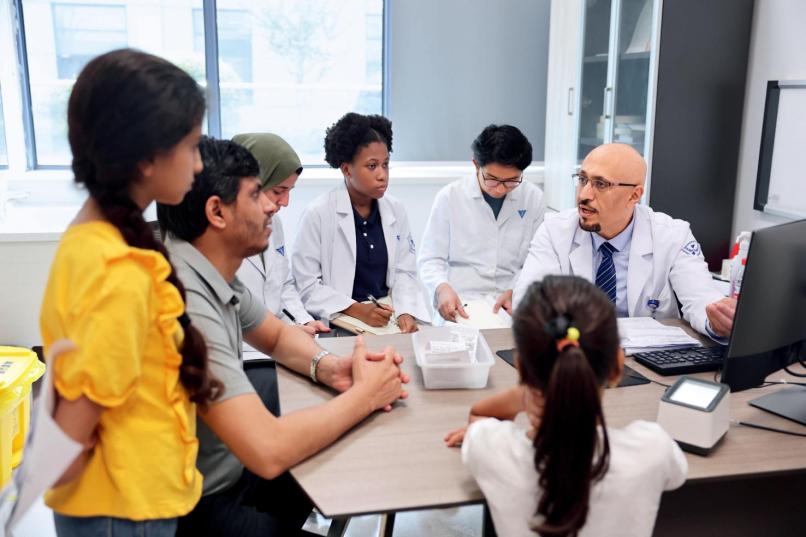
Amar leads international students in a clinical consultation session
A Wider Path Ahead
While pursuing his doctoral degree at Zhejiang University School of Medicine, Amar frequently visited his friends in Yiwu.
"Yiwu is famous for its small commodities," he recalled. "But after several visits, I was deeply attracted by the city's inclusiveness and friendly atmosphere." As a self-described food enthusiast, he still speaks enthusiastically about Yiwu's diverse culinary scene. "You can enjoy authentic Turkish kebabs, Arabic flatbread, Mexican tacos, and much more without ever leaving the city. That's one reason I loved coming here."
Yet what truly attracted him went beyond food and commerce. In 2013, China proposed the Belt and Road Initiative, and Yiwu quickly became one of its important hubs. Even as a student, Amar sensed that the city had tremendous potential.
At the same time, he noticed a pressing challenge. Each year, more than 500,000 overseas business visits are made to Yiwu, while more than 13,000 foreign residents from over 100 countries and regions live there long term. Many faced significant barriers to accessing healthcare due to language differences and unfamiliar medical procedures. Some avoided seeking treatment for minor illnesses. Others travelled to Hangzhou, Shanghai, or even Beijing for medical care. Some brought large quantities of medication from their home countries simply because they were unaware that equivalent medicines were available in China.
Seeing these difficulties, Amar began asking himself a question: Why not become a doctor in Yiwu? After earning his doctorate, he declined opportunities from medical institutions in several major Chinese cities and chose Yiwu instead.
At the time, however, there was no precedent for a foreign physician practicing in the city. Determined to make it happen, Amar researched licensing procedures for foreign doctors across China, prepared the necessary qualifications, and worked closely with local authorities. The Yiwu government strongly supported the effort and helped complete the required procedures efficiently. "The openness and efficiency I experienced made me feel truly welcomed," said Amar.
Today, Yiwu has six registered foreign physicians and a mature framework for licensing international medical professionals. Multilingual healthcare services have significantly improved the medical experience for foreign residents and visitors.
Amar still remembers his first patient in Yiwu. The patient was Chinese and appeared visibly anxious when seeing a foreign doctor. Amar conducted the consultation entirely in fluent Mandarin and performed a thorough physical examination. Gradually, the patient relaxed and began openly discussing the condition. "I felt that the barrier between us disappeared," Amar recalled. This experience strengthened his belief that medicine transcends nationality and connects people across cultures.
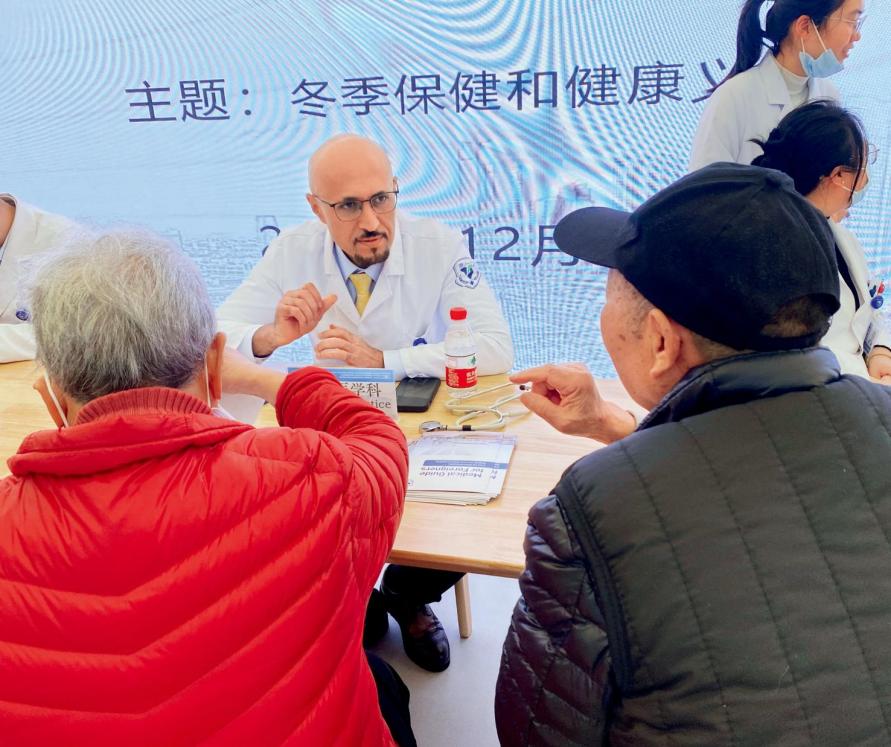
Amar participates in a community health outreach event, answering health-related questions from elderly residents.
One of his patients, an African businessman with severe hypertension, arrived at the hospital with a systolic blood pressure approaching 200 mmHg, placing him at extremely high risk. After emergency treatment by Amar and his colleagues, the patient stabilized. Since then, whenever the businessman returns to Yiwu, his first stop is not the Yiwu International Trade Market but Amar's clinic, where he checks his blood pressure, renews prescriptions, and expresses his gratitude before attending to business.
Another patient from India sought treatment for a persistent respiratory infection. During the consultation, Amar detected signs of an underlying cardiac condition and immediately coordinated further examinations. The patient subsequently underwent successful cardiac intervention surgery and later wrote Amar a heartfelt letter of thanks.
For Amar, these moments of trust across national borders affirm the decision he made years ago.
In 2021, ZJU4H established its first International Clinic. In addition to seeing patients in person, Amar also answers patients' questions online. Through these interactions, he became aware of many practical difficulties faced by foreign patients. Registration systems often required Chinese identity cards, making appointments difficult for passport holders; self-service machines offered only Chinese-language interfaces, while medical reports were also available only in Chinese.
Amar compiled these concerns and relayed them to hospital administrators. As a result, foreign patients can now register using passports, bilingual services have been added to the WeChat mini-program and self-service kiosks, and English-language medical reports and records are available.
Today, ZJU4H receives more than 26,500 visits from foreign patients annually. A complete health examination—from online booking to receiving an English-language report—can be completed in less than two hours.
Behind these improvements lies Yiwu's commitment to enhancing international healthcare services and creating a welcoming business environment. An increasing number of medical graduates from Belt and Road partner countries now come to Yiwu for observation, professional exchange, and medical practice. The path that Amar pioneered continues to grow wider.
“A Native Chinese”
After nearly a decade in Yiwu, Amar has not only cared for countless patients but also received widespread recognition from the city he now calls home.
Among the awards displayed in his office is a commemorative trophy from the Third Silk Road Friendship Ambassador program, which he received in 2023. The following year, he was awarded the West Lake Friendship Award, Zhejiang Province's highest honour for foreign experts. Among the 50 recipients in 2024, Amar was the only physician representative.
In 2025, he took on another role as Yiwu's Medical Insurance Promotion Ambassador. Historically, foreign residents in China primarily participated in employee medical insurance through their employers, leaving many dependent family members without coverage. To address this issue, Yiwu became the country's only pilot city exploring expanded medical insurance coverage for foreign residents.
The initiative reflects both policy innovation and the vision of building a global community with a shared future. As an ambassador, Amar actively participates in in-person outreach activities, explaining enrolment procedures and answering questions about China’s healthcare insurance system with clear and accessible language. “I hope every foreigner living in Yiwu, just like me, can enjoy a secure life and a comfortable working environment here,” he said.
The year 2026 brought even more milestones. He appeared on the Spring Festival Gala of the Yiwu segment and received China’s Permanent Residence Identity Card for Foreigners, commonly known as the “Five-Star Card.”
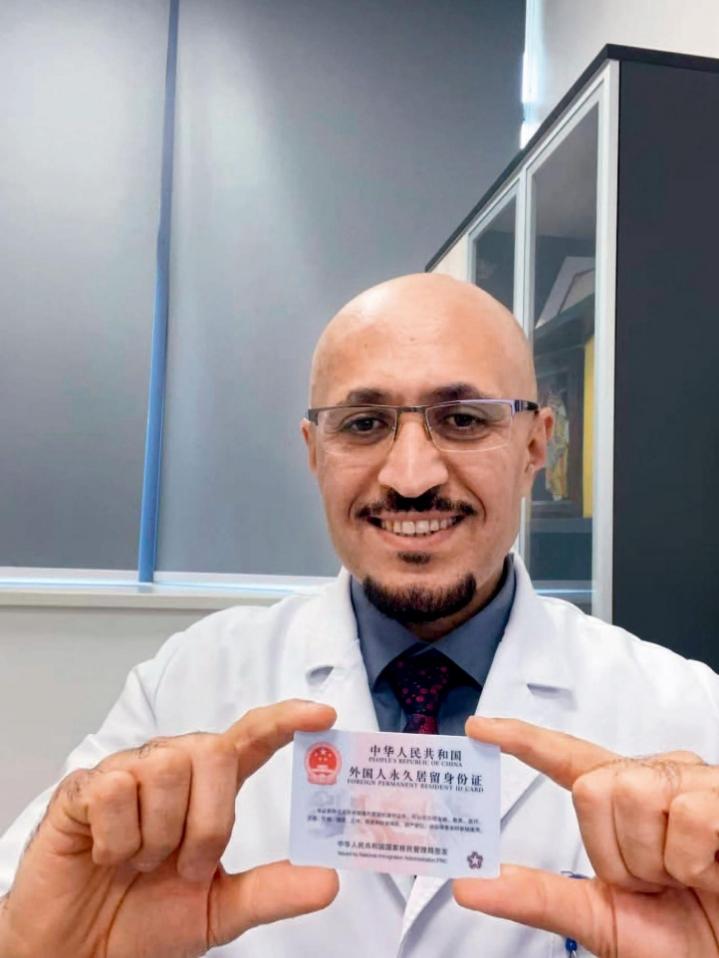
Amar receives China’s Permanent Residence Identity Card for Foreigners in 2026
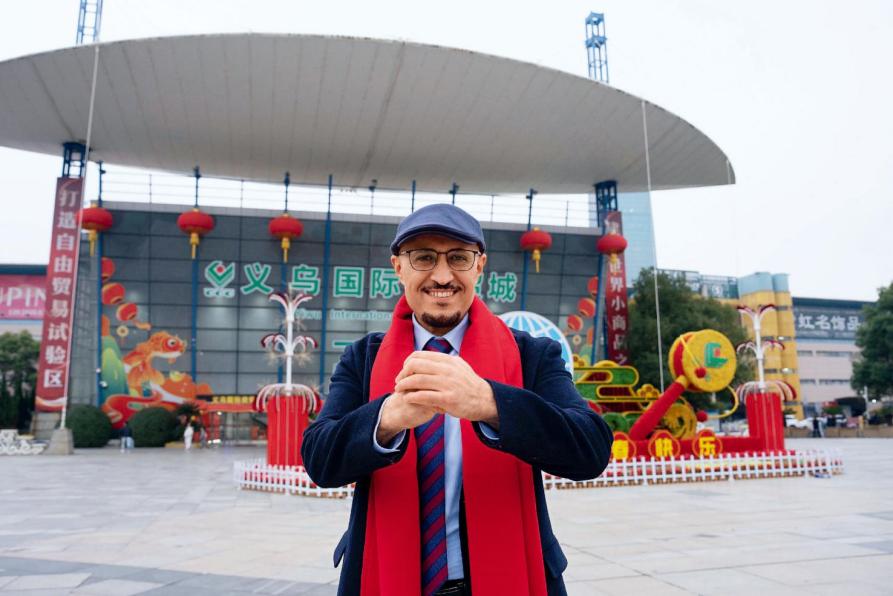
Amar films a Lunar New Year greeting video in front of the Yiwu International Trade Market
"I have celebrated the Spring Festival in China more than a dozen times, so I understand how meaningful the Spring Festival Gala is for Chinese people," said Amar. "Being part of it was incredibly exciting."
Friends often jokingly refer to him as a “native Chinese,” a title he gladly accepts. “I studied and worked in China. Half of my life has been spent here, so you could say I am ‘made in China,’” he said with a smile. “Now that I have received the Five-Star Card, I truly feel like a Yiwu resident—and a genuine native Chinese.”
More than a decade ago, while competing in the Chinese Bridge competition, Amar described his experience in China as a “Dream of the Silk Road.” “My journey in China is woven together by a series of dreams,” he recalled.
That dream ultimately brought him to Yiwu, where he built both a career and a family. His wife is also Arab, and their three children attend high school, middle school, and primary school in Yiwu. Amar encourages them to learn Chinese well and gain a deeper understanding of Chinese culture. Perhaps one day they, too, will embark on their own Silk Road dreams.
The Yemeni boy who once dreamed of the East has become a bridge connecting Yiwu with the world through medicine. “I will not stop here,” Amar said. “I will stay true to my original aspiration, use medicine to bring warmth to others, and continue serving as a bridge that transcends language and connects people across the world.”
By Yu Bing, Global People Magazine


@ Study at ZJU Wechat Subscription
Copyright © 2021International college,
Zhejiang University
Technical Support : hzccx Manage Login
You are the 1000 visitor


