




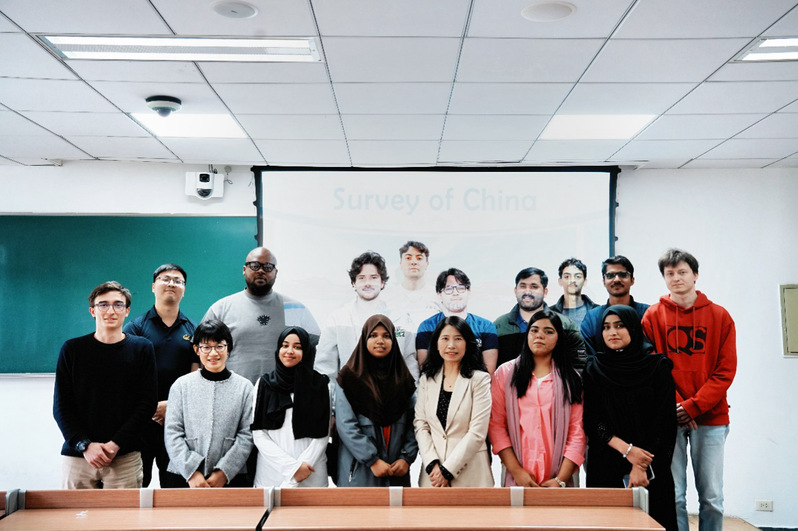
On April 30, 2026, Professor Chen Weiying, Vice Dean of the International College of Zhejiang University, delivered a special lecture entitled "Understanding China: From Information to Insight" in the Survey of China course for international postgraduate students. Drawing on international students’ experiences of studying and living in China, the lecture explored a central question: How can we truly understand China? Professor Chen encouraged students to move beyond surface-level observations toward systematic understanding and deeper cultural insight.
Building a Framework for Understanding China
In recent years, short videos themed around “Becoming Chinese” have gained popularity on international social media platforms. Many foreign content creators attract audiences by showcasing aspects of “Chinese-style living,” such as drinking hot water, taking high-speed trains, ordering food delivery, or practicing tai chi. Professor Chen noted, however, that such content often focuses on visible cultural symbols and everyday practices while overlooking the underlying social and cultural logic. Simply acquiring information about China, she explained, is insufficient for developing genuine intercultural understanding.
To help students build a more comprehensive framework for understanding China, Professor Chen introduced a three-level model: Information – Interpretation – Insight. Information refers to observable phenomena, such as food delivery services, high-speed rail, and livestream e-commerce. Interpretation examines the institutional systems, public policies, educational structures, economic models, and social mechanisms behind these phenomena. Insight goes a step further by exploring China's historical traditions, cultural values, social psychology, and long-term developmental logic. She emphasized that many misunderstandings about China arise from stopping at the level of observable facts. Only by connecting these three layers can one achieve a meaningful understanding.
Using the example of Chinese people's preference for drinking hot water, Professor Chen illustrated this framework. While it appears to be a simple daily habit, it is closely related to traditional Chinese medical concepts such as the balance of yin and yang and the philosophy of preventive healthcare. More profoundly, it reflects a broader Chinese outlook that values prevention, long-term well-being, and continuous self-care. Through this example, students came to appreciate how ordinary everyday behaviors often embody deeper cultural values and ways of thinking.
Interactive Discussions on Cultural Differences
The lecture also featured an open discussion session that encouraged active participation. Professor Chen invited students to reflect on questions such as: After studying in China for some time, what differences have you observed between Chinese people and people in your home country? Are there any aspects of Chinese society or behavior that you still find difficult to understand? Students from France, the Czech Republic, Pakistan, the United States, and other countries enthusiastically shared their observations and experiences.
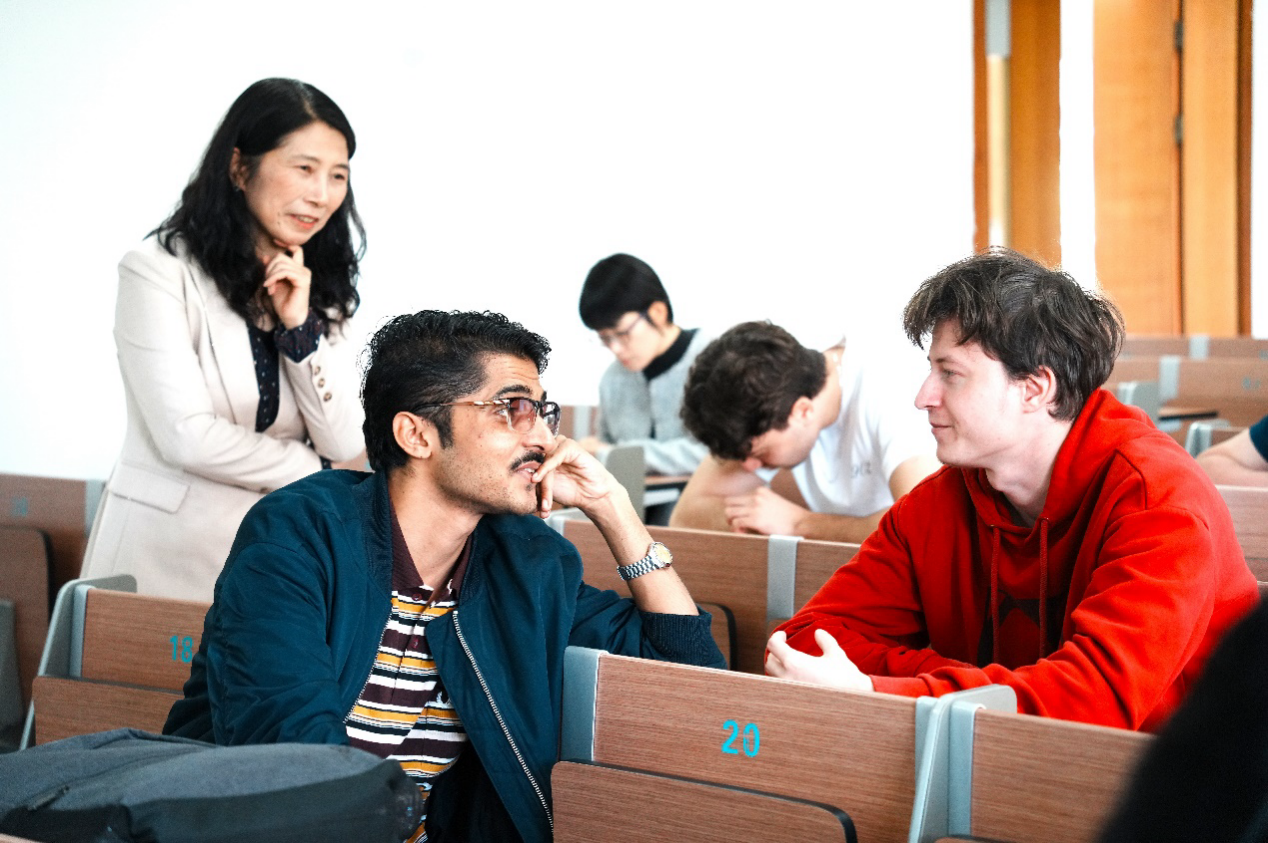
One student from France remarked that the efficiency of Chinese society had greatly impressed him. From food delivery to online government services, many daily tasks can be completed remarkably quickly. At the same time, he noticed that Chinese people place a strong emphasis on efficiency, which sometimes influences the pace of interpersonal communication. Professor Chen guided students to consider that this emphasis on efficiency is closely connected not only to China's large population and rapid urbanization, but also to its long-established social organization, collective cooperation, and stage of modernization.
When discussing whether China's development model could be replicated elsewhere, students from Morocco, Pakistan, and Nigeria observed that differences in governance systems, social conditions, infrastructure, and policy implementation make it difficult to reproduce the same outcomes in their own countries.
Understanding China's Underlying Logic
In her concluding remarks, Professor Chen reiterated a key framework for understanding China: Surface —— System —— Underlying Logic. She encouraged students to cultivate systematic and critical thinking, learning to move from observable phenomena to structural analysis, from cultural differences to underlying logic, and from personal experience to broader social and cultural understanding. She concluded with an inspiring message: “China is not difficult to understand; it simply requires a different perspective. To understand China is also to better understand the diversity of our world.”
The lecture not only equipped international students with practical approaches to interpreting complex societies, but also encouraged them to look beyond superficial cultural symbols and develop a deeper appreciation of China's social dynamics and cultural foundations. It further enriched Zhejiang University’s international curriculum, promoted meaningful intercultural dialogue, and contributed to cultivating globally minded students with strong intercultural competence.


@ Study at ZJU Wechat Subscription
Copyright © 2021International college,
Zhejiang University
Technical Support : hzccx Manage Login
You are the 1000 visitor


