




In July 2026, 15 graduate students from ZJU carried out two-week teachingpracticeat three Chinese-languageschools in Sabah, Malaysia, covering history, Chinese, culture, Tai Chi, and AI. This 3,000-km journey bridged cultures and energized China-Malaysia exchanges.
As they stepped onto the podium, they embraced cultural transmission. Two weeks brought laughter, tears, and reluctant goodbyes—each member returned with their own story.
History Group:
Zhao Yuanjian (Class of 2023Ph.D. candidate, School of History): Teaching history is about awakening cultural echoes in our blood. When I spoke of the Silk Road and saw the spark in my Malaysian students' eyes, I knew the seeds of Chinese heritage had sprouted in Southeast Asia.
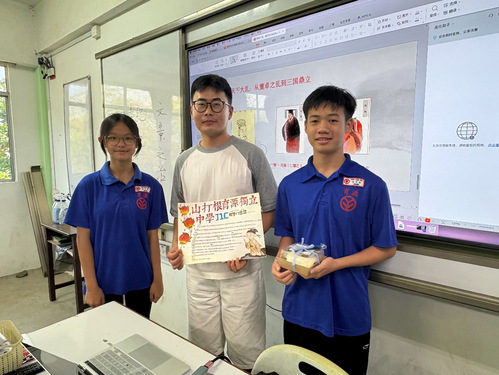
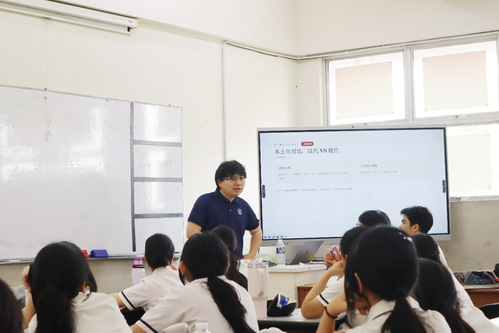
Liu Yiming(Class of 2025master's student, College of Media and International Culture): I feared modern Chinese history would feel distant. But when students began comparing revolution and reform on their own, I saw historical thinking taking root.
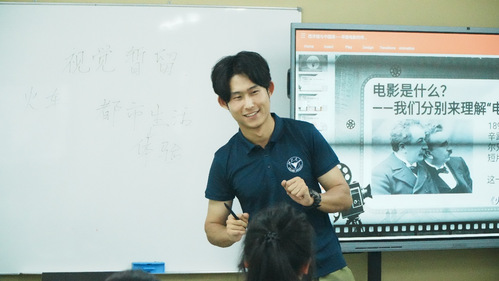
Chinese Language Group:
Yang Xiaohan (Class of 2025Ph.D. candidate, College of Education): AI brought ancient poetry to life on screens, but what moved me most was the light in my students' eyes when they first said I got it in Chinese. No technology can match that moment.
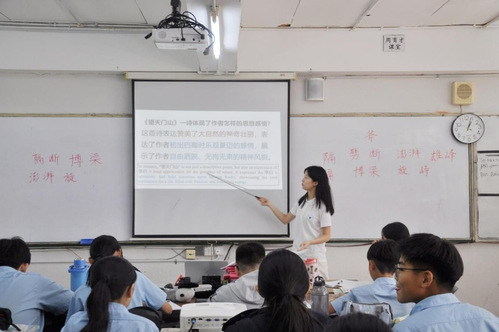
Lan Meng (Class of 2024master's student, College of Media and International Culture): Simple games enlivened the class. Seeing shy students speak Chinese, I saw interest is the best teacher—and finding that key is our mission.
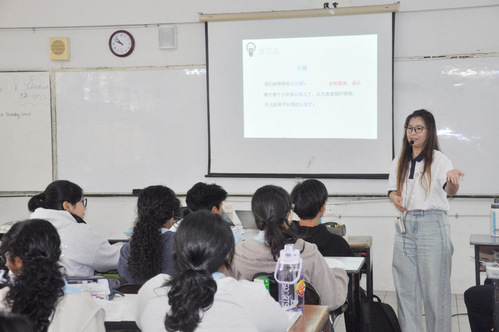
Ding Yinghang ( from Vietnam, Class of 2025Ph.D. candidate, College of Education): When a student said I understood this lesson, all the hard work felt worth it—perhaps that is the true meaning of education.
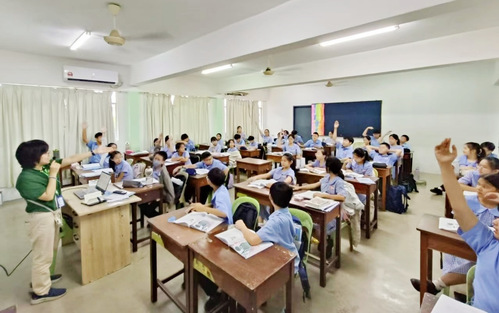
Chen Yuanzhen ( from Malaysia, Class of 2025master's student, College of Media and International Culture): As a Malaysian, I understand my students' complex feelings toward Chinese. When a quiet student raised his hand in class, I saw education is about igniting courage, not pouring in knowledge.
Traditional Culture Group:
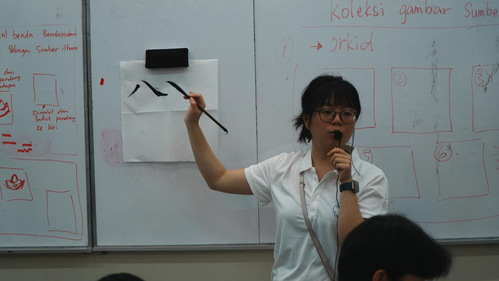
Shen Ruolan (Class of 2025 master's student, School of Public Administration): As I taught Chinese painting of bamboo, I watched students draw their vision of bamboo with unpolished strokes. Beyond technical skill, the brush‑and‑ink work conveyed cross‑ocean cultural identity and sincere affection.
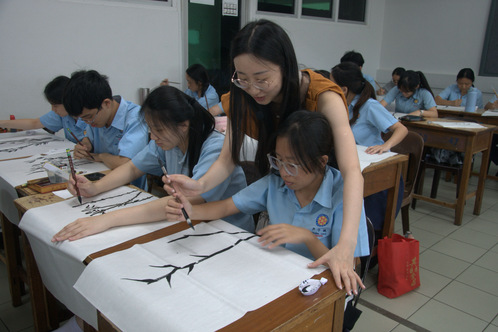
Jin Xuan (Class of 2025 Ph.D. candidate, School of Public Administration): Watching students hold a brush for the first time with such focus, I felt Chinese characters transcend language and borders, touching the deepest part of the heart.
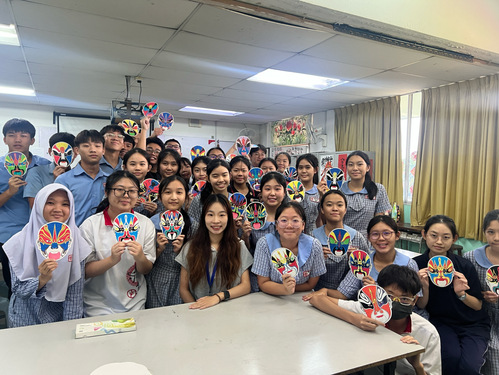
Zhu Xinying (24level Ph.D. student, School of Marxism): When students excitedly held up their own mask creations, I believed art itself is a language that needs no translation—it crosses cultures and borders, letting hearts speak directly.
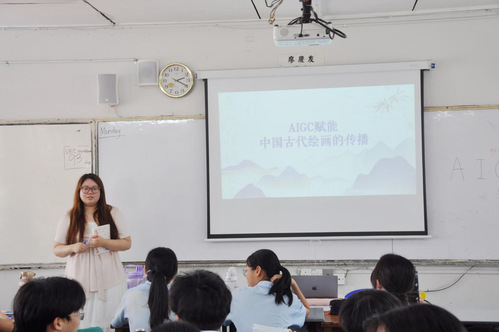
Luo Xinyue (Malaysia, 25level master's student, School of Arts): With AIGC, I made flowers in ancient paintings bloom in class. Watching the wonder ripple in my students' eyes, I felt deeply that good technology is not just a cold tool—it is a warm bridge to hearts.
Sports Group:
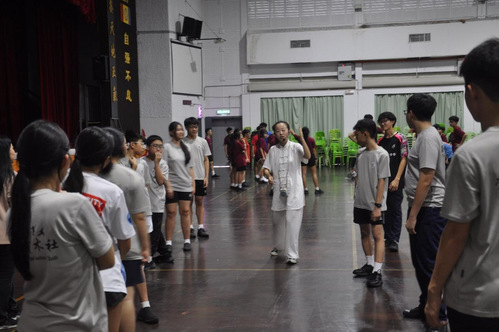
Zhao Chunran (Class of 2024 Ph.D. candidate, School of Arts): Although they may not fully grasp the deeper significance, the earnestness in their eyes gave me hope for cultural inheritance.
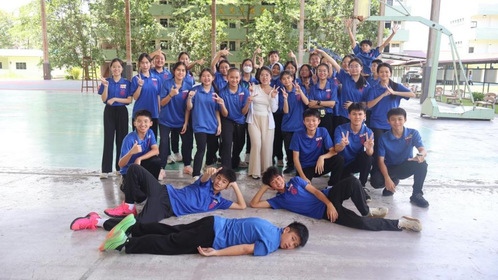
Zhao Yufei (24level Ph.D. student, School of Earth Sciences): The hardest part of teaching Tai Chi was helping students grasp hardness and softness in harmony. Watching them sweat through practice, I saw martial arts as both a test of will and a silent transmission of cultural spirit.
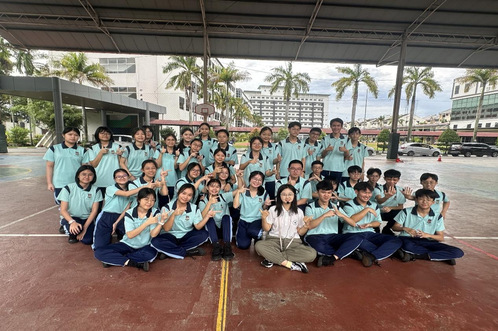
Han Yixin (25level Ph.D. student, School of Marxism): The martial arts students were agile, yet few knew the cultural meaning of the fist-and-palm salute. When they finally grasped that martial arts begin with virtue, I knew this was more than a class—it was a cultural awakening.
AI Group:
Zhang Lijie (25level Ph.D. student, College of Education): When a student used AI to blend WWII history into a game, I saw creativity and tech collide. Tech education inspires creation, not replacement—human imagination is irreplaceable.
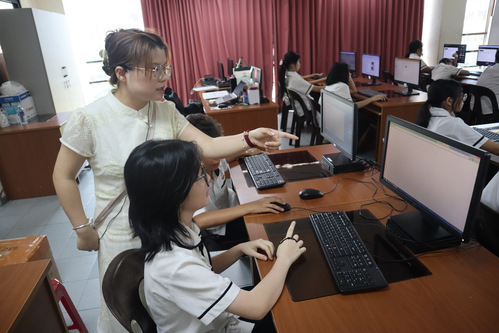
Ji Shuang (24level master's student, College of Education): From AI image generation to 3D scene building, I guided students through the creative process. Helping them shift from following to leading technology, I realized that independent judgment and creativity are what matter most in the AI era.
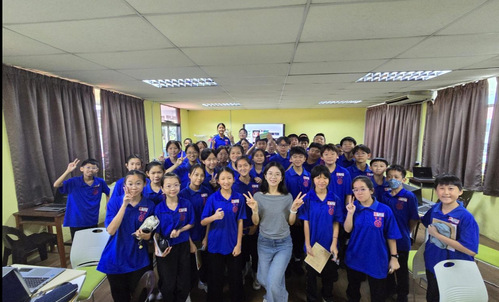
Though this 3,000-km journey has ended, cultural seeds have taken root in the hearts of young people in Southeast Asia, and the China-Malaysia youth friendship has just begun. May this cultural relay flourish, and more young voices join in carrying the torch of Chinese civilization to farther shores.


@ Study at ZJU Wechat Subscription
Copyright © 2021International college,
Zhejiang University
Technical Support : hzccx Manage Login
You are the 1000 visitor


